

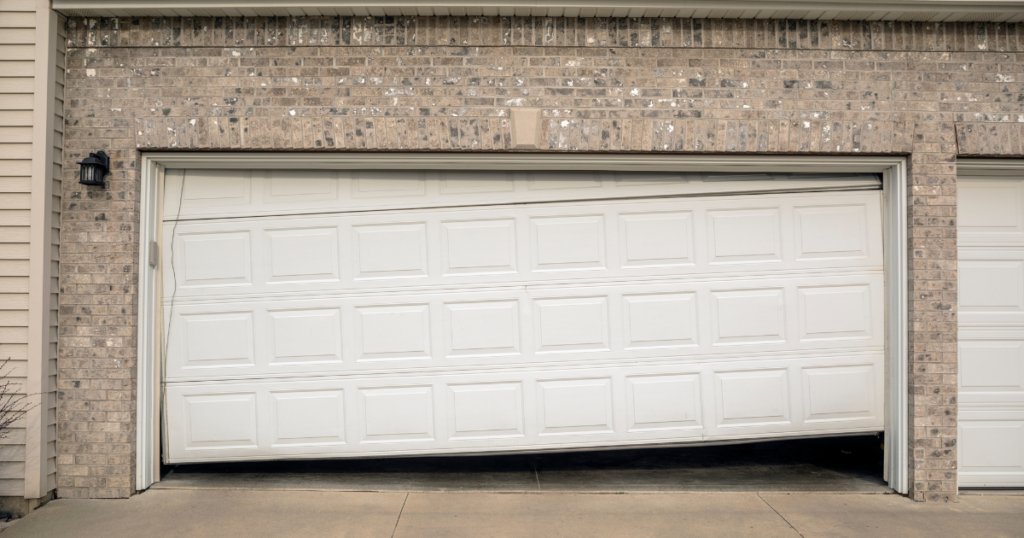
A garage door is the largest moving opening in most South Carolina homes, and in high wind, it’s often the first thing to fail. When the National Weather Service issued a Tropical Storm Warning for Sumter County ahead of Hurricane Ian in 2022, its own impact assessment specifically named “garage door failure leading to structural damage” as a likely outcome of sustained wind in the 74–110 mph range. That’s not a coastal problem. That’s a Sumter problem.
Sumter Doesn’t Need a Direct Hit to Feel Hurricane-Force Wind
Sumter sits well inland in South Carolina’s Midlands region, but “inland” has never meant “immune.” When Hurricane Hugo made landfall near Charleston in 1989, it retained hurricane-force winds far enough inland that Shaw Air Force Base, right here in Sumter, recorded a 109 mph gust as the storm’s eye passed to the south. More recently, Hurricane Ian (2022) and Tropical Storm Helene (2024) both brought damaging, sustained wind to Sumter County even after weakening well below hurricane strength at landfall.
| Why this matters for your garage door: A standard, non-wind-rated garage door can begin to flex, buckle, or blow inward once sustained wind and gusts climb into the 70–90 mph range, the same range Sumter has already seen more than once. Once a garage door fails, wind pressure inside the garage can lift the roof and blow out walls and windows from the inside out. |
What “Wind-Load Rating” Actually Means
A wind-load rating (sometimes called a wind-resistance or design pressure rating) tells you how much wind pressure a garage door is engineered to withstand before it fails. Standard residential garage doors are typically built for everyday wind loads, not sustained tropical-storm-force gusts. A wind-load-rated door uses reinforced tracks, heavier-gauge panels, and additional structural bracing to hold up under the kind of pressure Sumter has already experienced from Hugo, Ian, and Helene.
Amarr, one of our Preferred Provider brands, offers wind-load-rated door options engineered specifically for this kind of regional exposure, worth a conversation if your current door predates recent building code updates.
Your Pre-Storm-Season Garage Door Checklist
1. Inspect Panels and Tracks
- Look for dents, warping, or rust; any weak point is where wind pressure will find its way in first.
- Check that tracks are securely fastened to the frame and free of debris or misalignment.
2. Test the Rollers and Hardware
- Loose or worn rollers, hinges, and brackets reduce the door’s ability to hold together under pressure.
- Tighten all visible hardware and lubricate moving parts before storm season peaks.
3. Confirm Your Opener Has Battery Backup
- Power outages are one of the most common side effects of tropical-storm-force winds in the Midlands.
- A battery backup keeps your opener functional and lets you secure the door manually if needed.
4. Secure Your Automatic Gate, Too
- If you have an automatic gate, confirm it has a working manual release and, ideally, battery or solar backup.
- Loose gate arms and unsecured panels become projectiles in high wind just like any other unanchored object.
5. Know Your Door’s Age and Rating
- If your garage door was installed before 2010, it likely predates current wind-load expectations for the region.
- A quick inspection can tell you whether reinforcement or replacement makes more sense than risking storm damage.
Don’t Wait Until a Storm Is on the Radar
The best time to reinforce or replace a vulnerable garage door is weeks before a storm is named, not the day before it’s forecast to affect the Midlands. Reliable Garage Door & Automatic Gate offers free inspections to help Sumter-area homeowners understand exactly where their garage door and gate stand heading into peak storm season.
| Get Your Free Wind-Load Inspection Sumter has already seen hurricane-force winds more than once. Make sure your garage door is ready before the next one. Call Reliable Garage Door & Automatic Gate today. (803) 883-1776 |